Discovery: My Family and My Baby
Discovery medical requested a Portal for expectant mothers, the intention was to create a "one-stop" platform for pregnancy needs. In addition, this portal should guide the mother through her child's first year and should integrate directly into the mother's medical aid policy.
Approach: In order to better understand our users, I Identified the key areas to explore, such as user needs, pain points, desired features, user experience, and usability concerns. This interim analysis was done using a Likert scale of a homogenous sample group
I then developed a semi-structured discussion guide for the user interview questions, aiming for broad, open-ended questions to encourage participants to share their experiences and opinions freely. Following up with more specific probing questions to dig deeper into relevant topics.
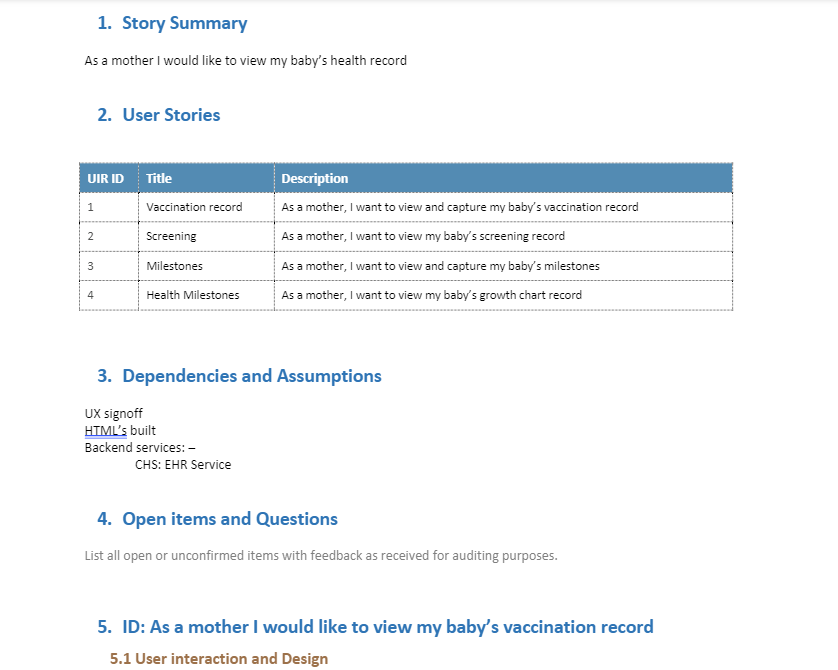
Findings: Insights from the Interview data were then taken back to the client. With the core development team, I created a set of user stories to begin development on the portal. This enabled us to identify what was possible, what our MVP (first pass) product would be before we began enhancements, and, how long the initial development would take us.
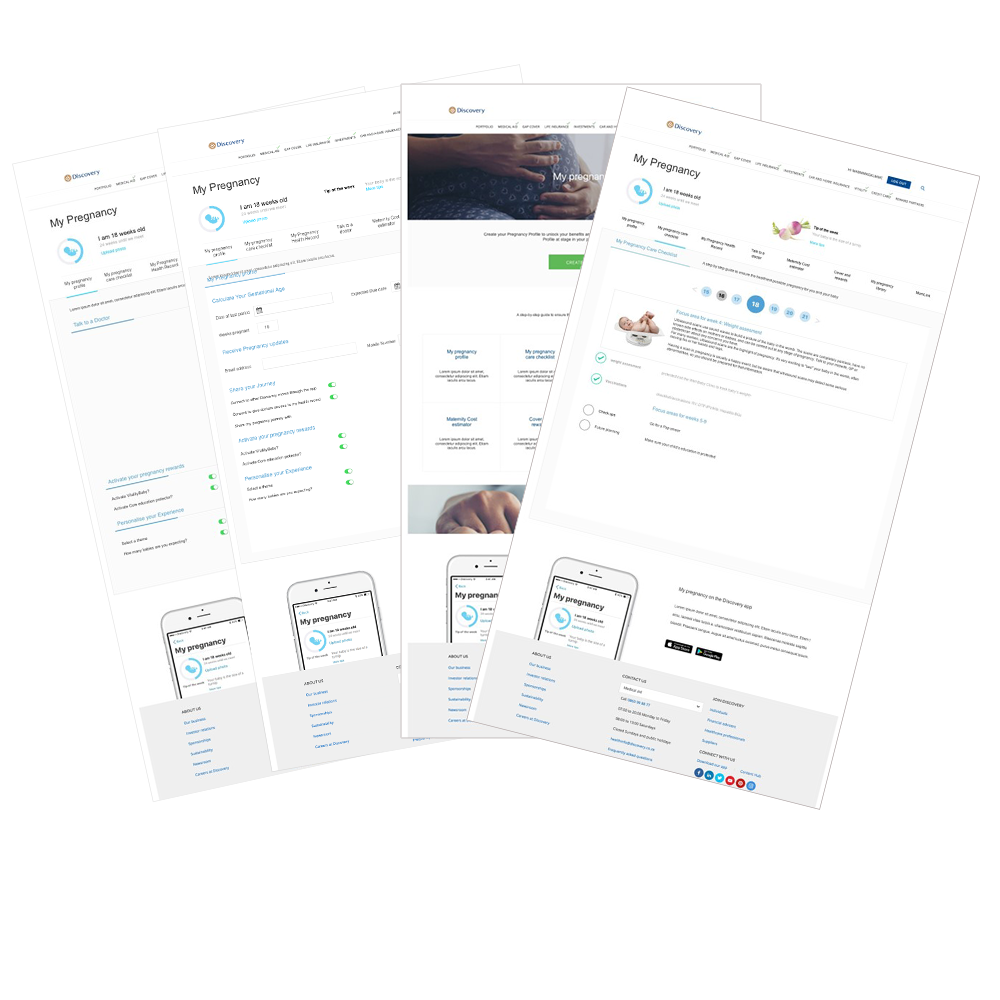
Wireframing: I then began wireframing (firstly in low fidelity in Figma) the reason for this is that clients are often hesitant to make changes if they assume you have spent to much creative effort, so a lower fidelity start allows for feedback and robust collaboration.
Information Architecture: During this time, I began creating the wireframes, content and information architecture. We met with the client twice a week for collaboration and feedback.
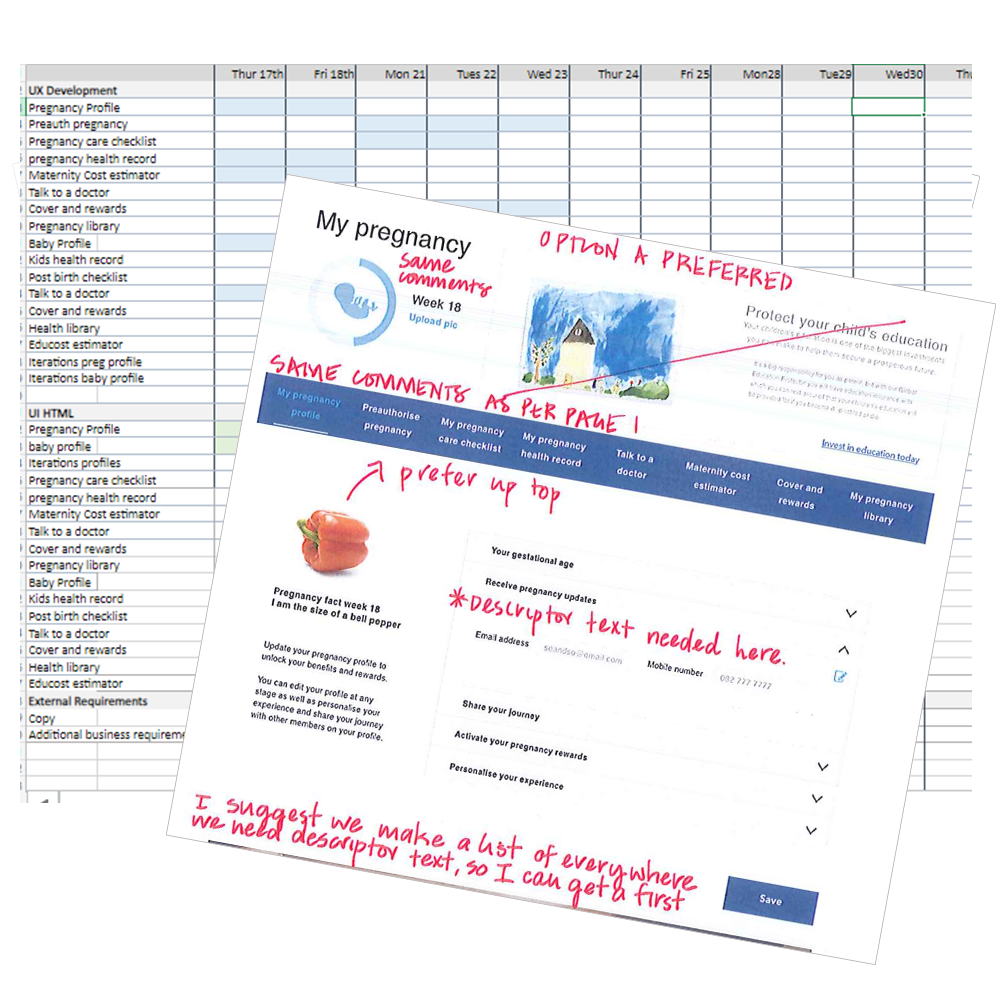
Client expectation management: Client feedback was always discussed and considered. I take the approach of collaborative guidance. Creating buy-in along the way is a great method of ensuring not too much wasted effort is spent if the client would like to make changes, It also helps the clients to feel involved in the process.
I then consolidated feedback and created a timeframe in which the client could expect to see the next draft.

Pre launch: Once the clients were happy with the Portal, a second round of user testing began using higher fidelity wireframes. This encompassed user observation and protocol analysis. Observations were leveraged to better inform the design and experience before starting development on the first iteration.